
Civics in Action: Showing Up for What You Believe In
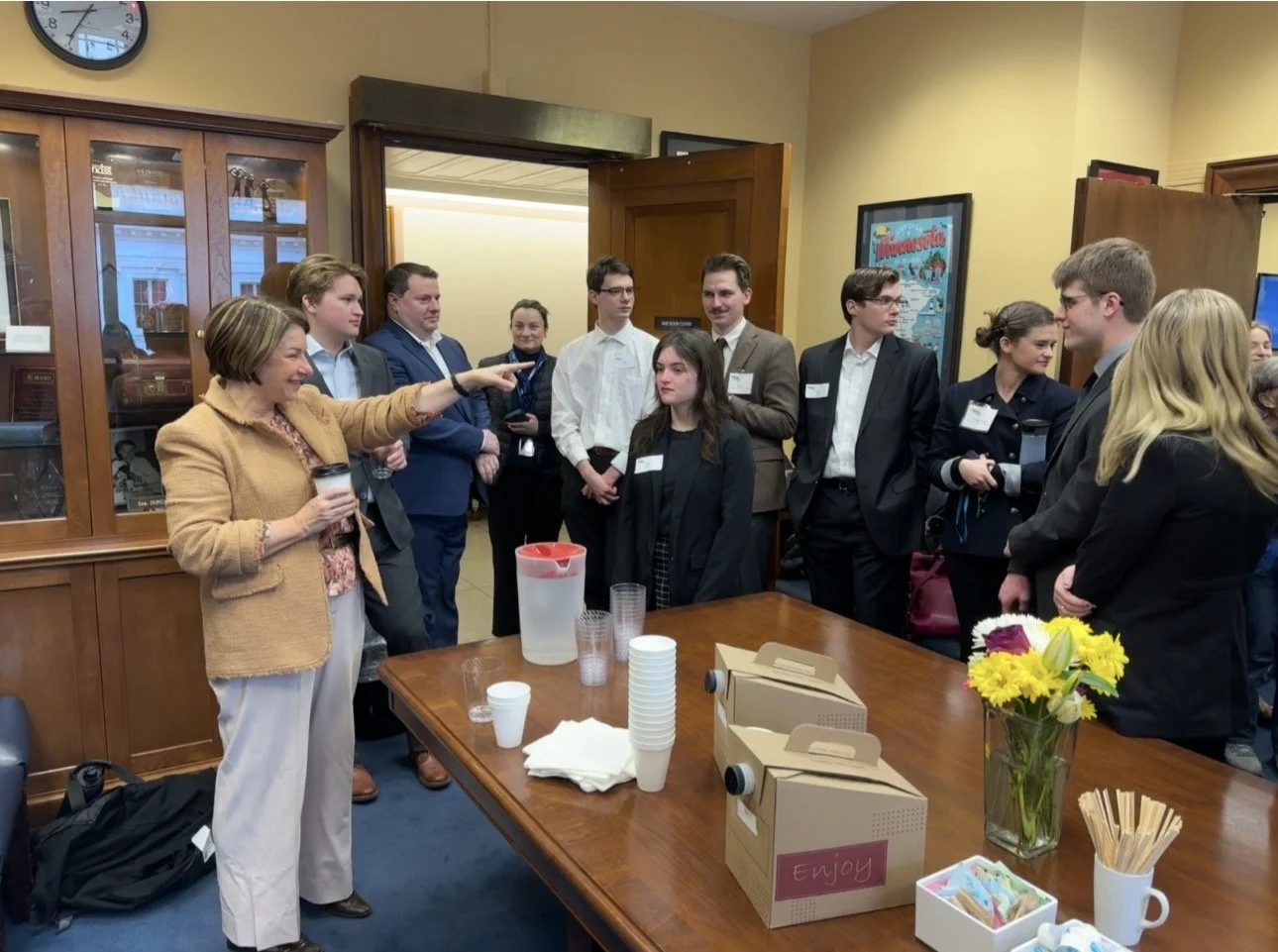
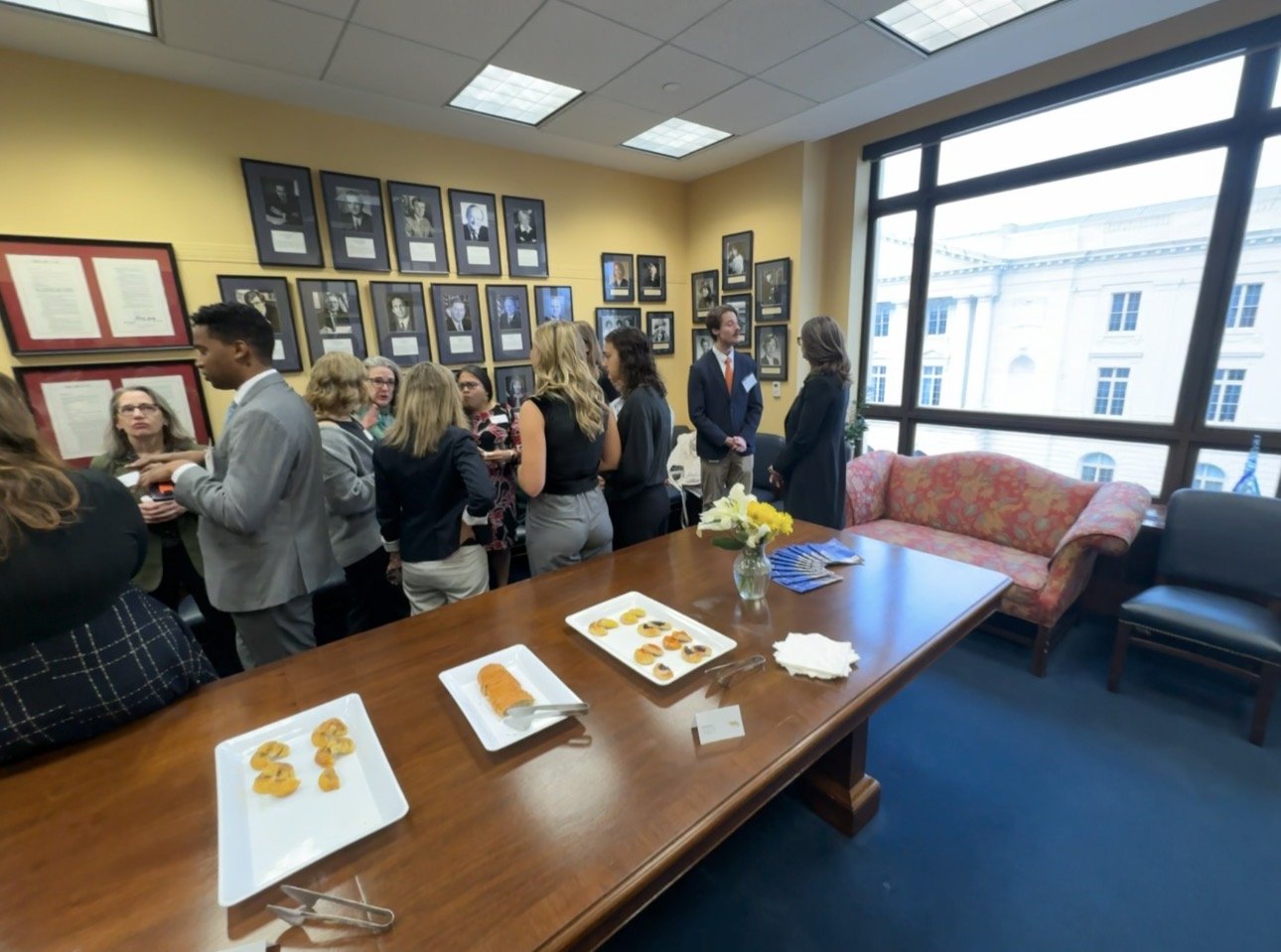
In January 2025, just days before the Presidential Inauguration, I attended a constituent event on Capitol Hill in Washington, D.C. Like many members of Congress, Minnesota's U.S. senators regularly host gatherings where constituents can stop by, enjoy a cup of coffee, meet fellow Minnesotans, and connect directly with the people elected to represent them.
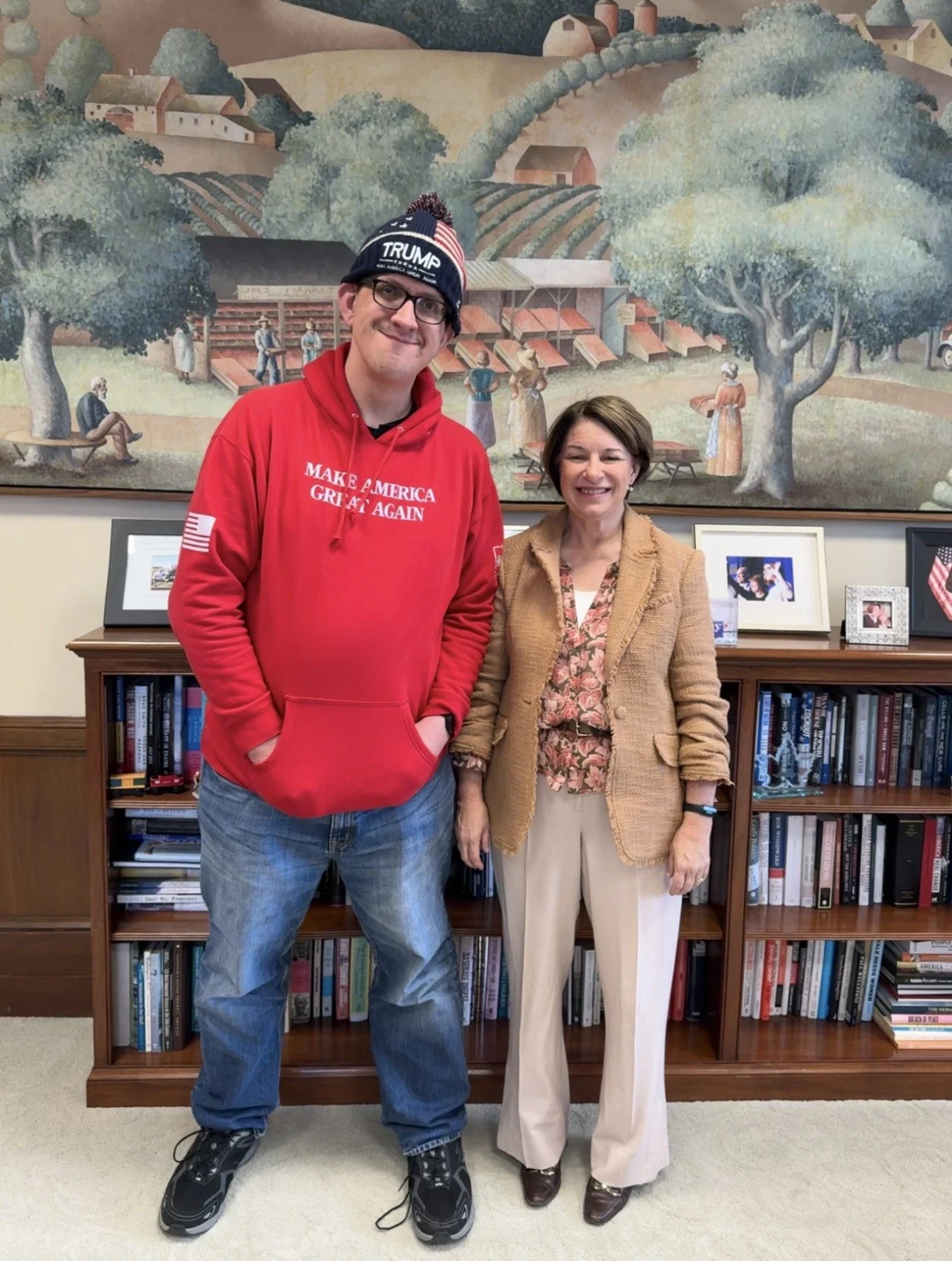
I walked into that room wearing a bright red "Make America Great Again" hoodie and a Trump pom-pom hat.
A few people had warned me beforehand.
"Are you really going to wear that?"
"You might want to leave the political gear behind."
But I went exactly as I was—not to make a scene, start an argument, or change anyone's mind. I went because I believe that's what American civics is all about.
Showing up.
Participating.
Respectfully exercising the freedoms guaranteed by the Constitution.
That morning reminded me of something our country desperately needs to remember: civics and politics are not the same thing.
Politics asks us to pick sides.
Civics asks us to show up.
Politics focuses on elections.
Civics focuses on citizenship.
Politics often highlights our disagreements.
Civics reminds us of what we still share.
As a constituent, I had every right to attend that event. I also had every right to peacefully express what I believed through the clothes I wore. At the same time, the elected official hosting the event welcomed me with kindness and respect despite our political differences.
That simple interaction demonstrated something powerful.
Democracy works best when ordinary citizens participate.
One of the greatest strengths of the United States has always been that elected officials represent everyone in their district or state—not only the people who voted for them. Likewise, citizens have both the opportunity and the responsibility to engage with their government respectfully, even when they disagree.
Too often today, people stay inside political echo chambers. They avoid conversations with those who think differently. They assume disagreement automatically means disrespect.
It doesn't have to.
Real civic engagement happens when Americans are willing to walk into the same room, shake hands, listen, speak honestly, and treat one another with dignity.
That's how trust is built.
That's how understanding grows.
That's how representative government was designed to work.
The First Amendment protects far more than speech. It protects the ability of citizens to peacefully participate in public life, petition their government, assemble, and express their beliefs without fear.
Those freedoms only remain strong if we actually use them.
My experience reminded me that participating in our republic doesn't require holding elected office. It simply requires showing up.
Whether you consider yourself conservative, liberal, independent, or somewhere in between, your voice matters.
Attend the town hall.
Visit your senator's office.
Meet your representative.
Ask respectful questions.
Share your story.
Listen to someone else's.
You never know what one conversation might accomplish.
Our nation doesn't become stronger because everyone agrees.
It becomes stronger because people choose to participate with respect.
Character matters more than party.
Integrity matters more than ideology.
Kindness matters more than labels.
If we judged one another less by political affiliation and more by honesty, compassion, humility, and service, we'd rediscover something that has always made America exceptional: our ability to disagree without forgetting that we're still neighbors.
That's the heart of civic responsibility.
It's easy to complain from behind a screen.
It's much harder—and much more meaningful—to step through the door, introduce yourself, and become part of the process.
History is shaped by ordinary people who choose to participate instead of sitting on the sidelines.
So if there's one lesson I hope others take from my experience, it's this:
Follow your heart.
Show up.
Be respectful.
Stand for what you believe.
Listen with an open mind.
Treat people with dignity.
Remember that the person across the table is an American first.
Because democracy isn't something we simply inherit.
It's something we strengthen every single day through civic participation, mutual respect, and the courage to engage.
That's civics in action.🇺🇸